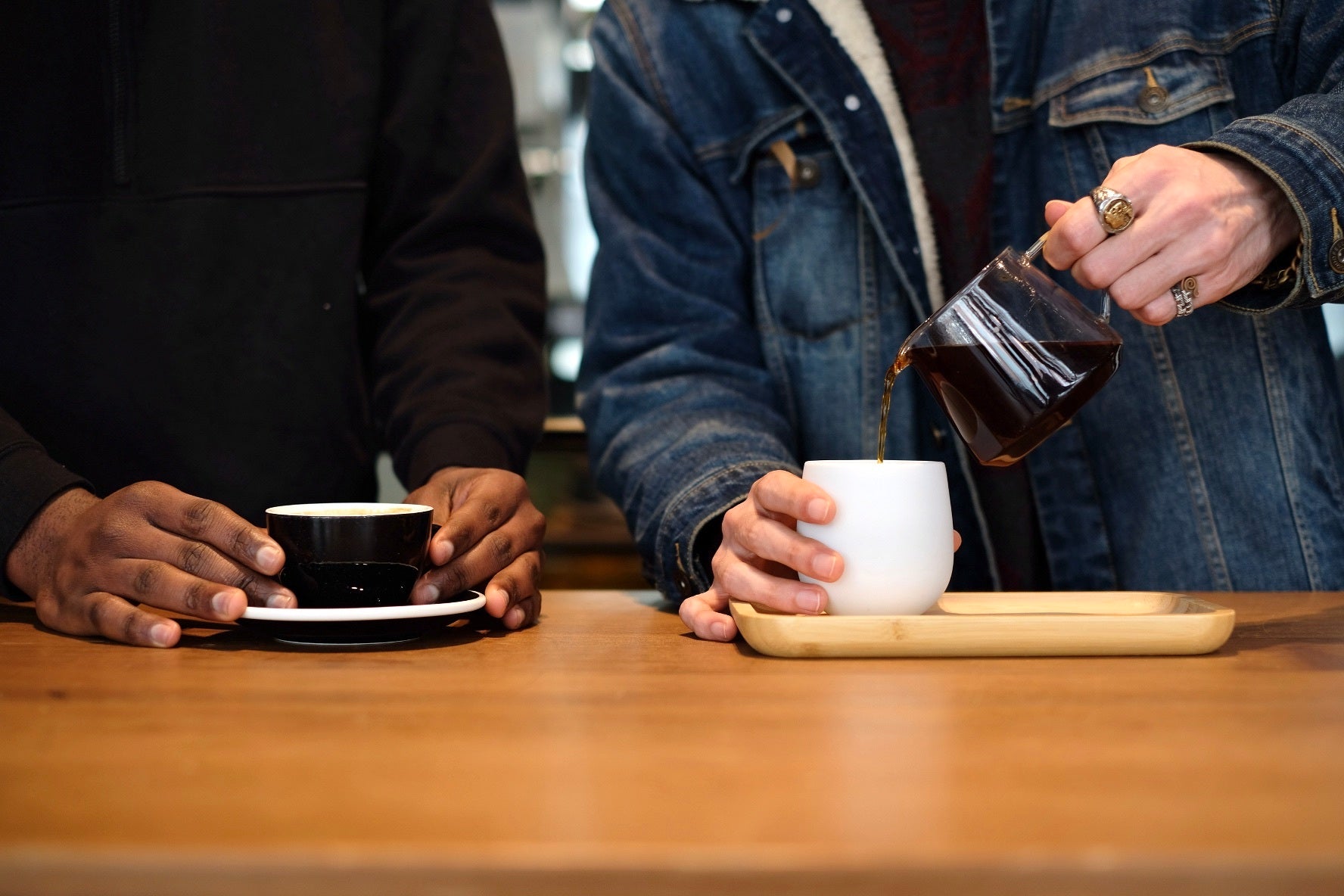


Munich has always had a strong coffee culture. Long before specialty coffee arrived, espresso bars, cafés, and traditional coffee houses were already deeply woven into the rhythm of the city. The influence of Italy and Austria shaped the way people in Munich drink coffee for generations. Combined with the city’s proximity to the Alps and its strong culinary identity, coffee has always played an important role in everyday life here.
At the same time, these deeply rooted rituals made the transition toward modern specialty coffee slower than in many other international cities. Traditional espresso culture was already highly appreciated and firmly established. Introducing lighter roast profiles, filter coffee, alternative brewing methods, and more origin-driven coffees required a genuine shift in perspective.
Over the last decade, however, Munich has become one of the most exciting coffee cities in Germany.
A New Generation of Coffee Culture
As Germany’s third-largest city and one of Europe’s leading travel destinations, Munich attracts millions of visitors every year through its architecture, hospitality, culinary scene, and cultural identity. This international energy has had a strong influence on the city’s coffee scene. Visitors arriving from cities such as Seoul, Tokyo, Singapore, Melbourne, Copenhagen, or London increasingly expect high-quality coffee experiences as part of modern urban culture.
Particularly across Asia, specialty coffee has developed rapidly in recent years, creating a much broader appreciation for filter coffee, seasonal coffees, modern café concepts, and diverse brewing styles. Tourism from these regions continues to shape expectations around coffee quality in Munich and contributes to the growing demand for more refined and internationally connected coffee experiences. At the same time, Munich has developed a strong local coffee community of its own.

The Pioneers of Specialty Coffee in Munich
Long before specialty coffee became more widely established in Germany, several cafés and roasters in Munich helped build the foundations for a more quality-focused coffee culture within the city. Johannes Bayer, through JB Kaffee, played an important role in shaping awareness around specialty coffee and roasting quality in Munich. Supremo Coffee and Comandante, led by the Braune family, have helped shape Munich’s specialty coffee scene for nearly two decades.
Over time, additional cafés and coffee concepts helped broaden and refine Munich’s specialty coffee culture. Men vs. Machine helped establish a more modern and internationally connected café culture in Munich over the last ten years. More recently, concepts such as Sweet Spot Coffee introduced rotating selections from national and international specialty coffee roasters, helping broaden access to different roasting styles and brewing approaches. Kanso Coffee Lab, located near Odeonsplatz, continues to push presentation and hospitality standards around specialty coffee forward. Suuapinga is another exciting addition that reflects the growing confidence and diversity of Munich’s coffee scene. Together, these cafés and roasters helped shape a coffee culture that is open, quality-driven, and internationally inspired while developing a distinct identity of its own.

Why THE BARN Chose Munich
For THE BARN, Munich was the clear choice for our second German city after Berlin. The city combines a strong appreciation for hospitality and craftsmanship with a growing openness toward modern coffee culture. This balance felt very natural to us from the beginning. We are proud to have opened two locations in Munich, each representing a different side of the city.
Our first café opened in Tal, in Munich’s historic old town, just steps away from the world-famous Hofbräuhaus, alongside landmarks such as Viktualienmarkt, the Mandarin Oriental Hotel, and the Cortiina Hotel. The space is intentionally calm and understated, creating a quiet coffee experience within one of the busiest parts of the city.
Our second café is in Glockenbachviertel, one of Munich’s most creative neighbourhoods, close to the Isar river. Surrounded by independent retail concepts, restaurants, and a younger, internationally minded crowd, the space reflects a more contemporary side of Munich. Both cafés embody our belief that coffee experiences are shaped not only by what is in the cup, but also by architecture, atmosphere, and hospitality.
Munich’s Coffee Future
Since opening our cafés in 2024 and 2025, we have noticed increasing momentum within Munich’s specialty coffee market. More international coffee concepts and specialty coffee roasters are beginning to recognise the city’s potential and are increasingly drawn to its growing coffee culture. What was once primarily associated with traditional espresso culture is becoming far more diverse.
Filter coffee, lighter roast profiles, seasonal coffees, and more progressive hospitality concepts are becoming increasingly visible across the city. At the same time, Munich continues to preserve its own identity and that balance is what makes the city so interesting. Munich is not trying to become Berlin, London, or Copenhagen. Instead, it is developing its own version of specialty coffee culture: quality-driven, design-conscious, internationally connected, and deeply rooted in hospitality.
For us, these coffees are not about replacing the single origin experience at the heart of what we do. They are about creating more moments to enjoy great coffee throughout the day.
And for us, this is what makes Munich so exciting to be part of right now.