Our core strength are coffees with distinct notes of terroir and exciting cup profiles. Single farm partnership coffees offering a taste journey throughout the best coffee regions and some of the most skillful coffee producer on this planet.
Red Currant. Raisin.
Our Kenyan lots really flew of the shelves this season, so we were excited to source this coffee from the final harvest of 2025. From Kirinyaga, Kamwangi AB is sweet and aromatic.

We are Roaster of the Year 2025 — by Crema Magazine
Free shipping for orders over 44 €
Delivery 1 to 3 days in 🇩🇪
In stock
Producer:
Origin:
Altitude:
Body:
Sweetness:
Acidity:
Varietal:
Process:

This AB has superb clarity, with bright notes of red currant and plum in the cup. The sweetness is gently syrupy, like raisin or candied orange. As it cools, rose hip shows a touch of herbal elegance.
This coffee has been processed at the Kamwangi Factory, belonging to the New Ngariama Cooperative Society in Kirinyaga, Central Kenya. Among the three wet mills under the cooperative, Kamwangi is one. It serves approximately 1800 farmers, although not all are currently active. These farmers primarily grow SL 34 (90%), along with SL28, K7, and Ruiru 11 varieties, at altitudes ranging from 1500 to 1800 metres above sea level. The factory is closest to the town of Embu.
Processing is done with Fresh River Water. The same water is recycled during the day through a recycling process enabling them to significantly reduce water consumption. They are Rainforest Alliance certified, and have established soaking pits for waste water treatment.


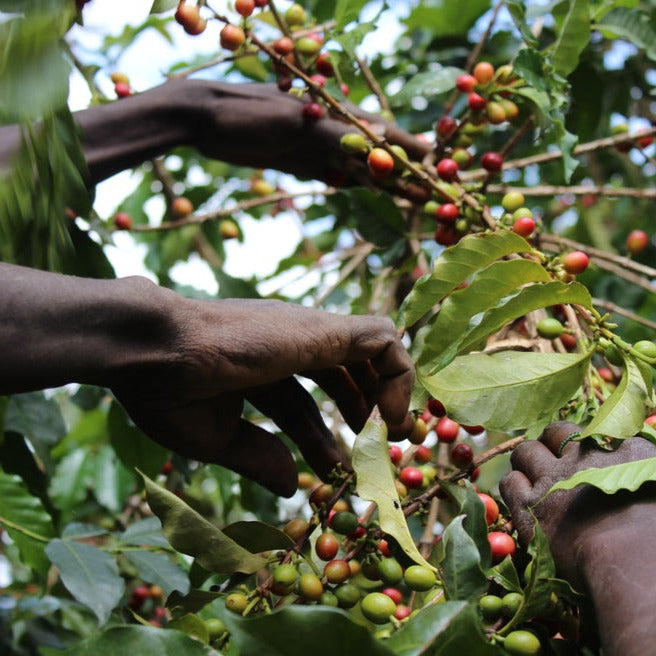
Once the coffee cherries have been accepted by the Cherry Clerk, they are pulped and fermented for approximately 16-24 hours, depending on ambient temperature at the time. Following fermentation, the coffee is washed in clean water from the Kii River and soaked for 12 hours. Newly installed tiles in the washing channels help preserve coffee and water quality, and all water used in processing is cleaned by filtering in earthen pits before being reintroduced to local waterways.
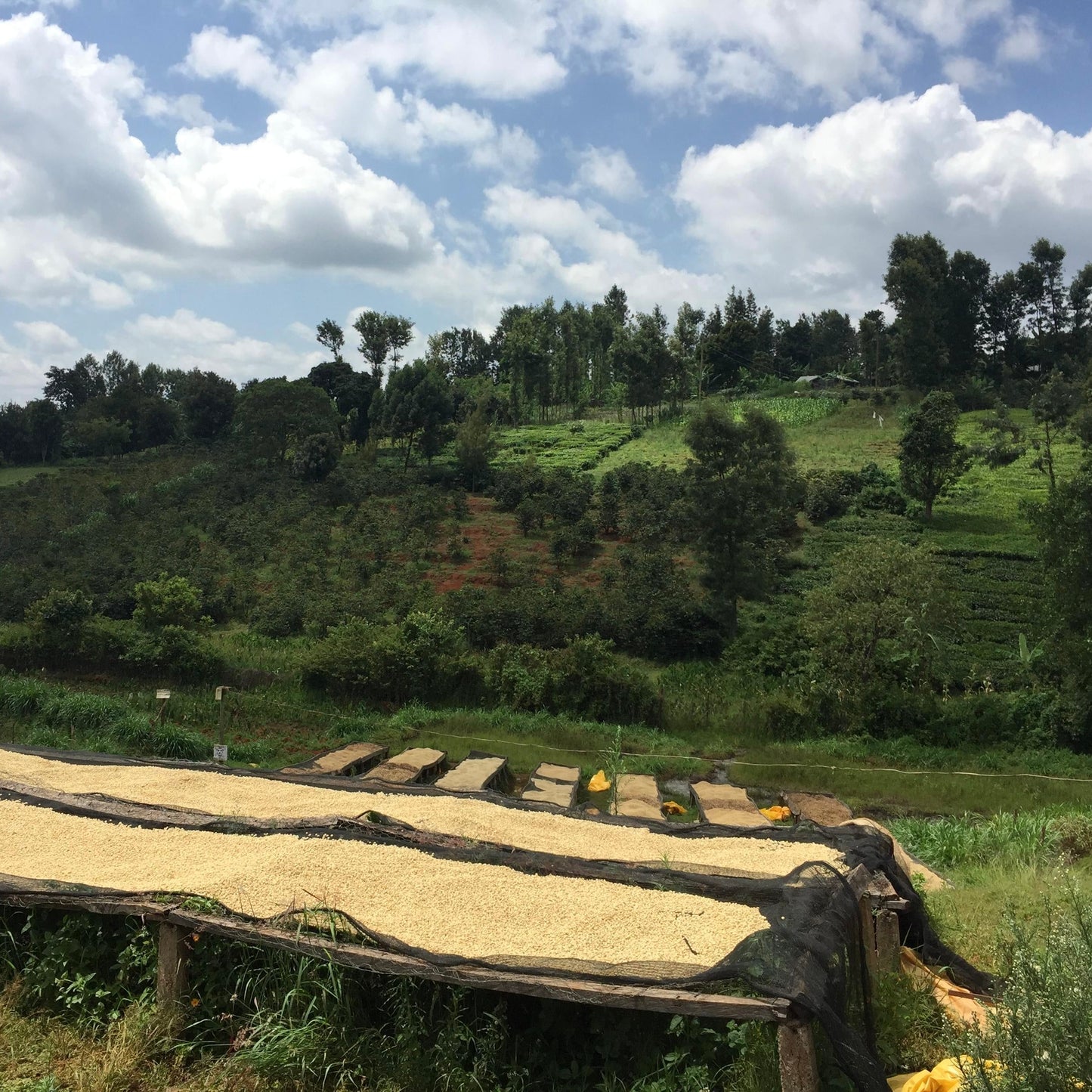
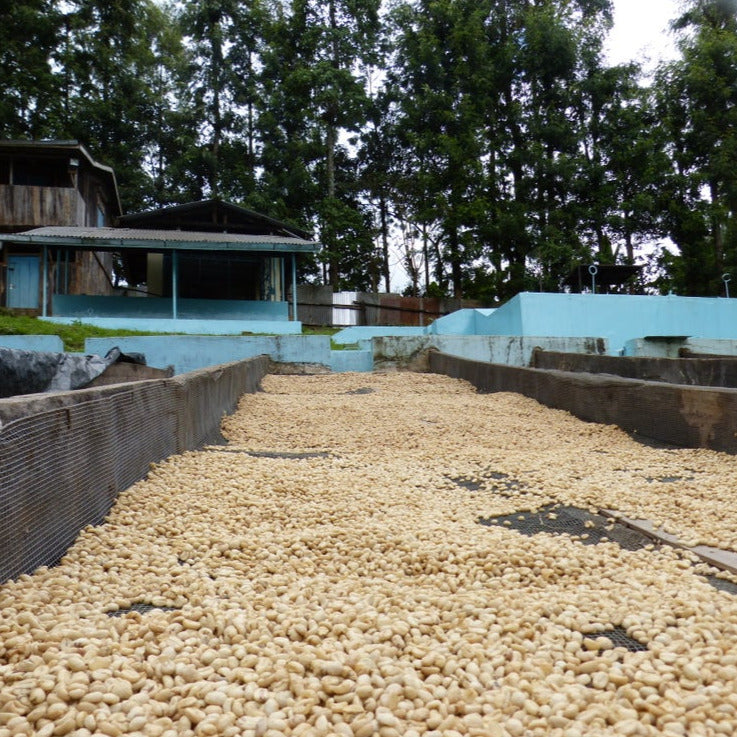
After washing and grading, the beans are laid to dry on raised beds. Workers rake the beds frequently to ensure even drying, covering the beds during the hottest time of day and at night, to shelter parchment from moisture. It takes approximately 14 days for the beans to dry.
Join our newsletter today and enjoy early access to limited coffee drops and other perks.
Having trouble entering your email? Click here.